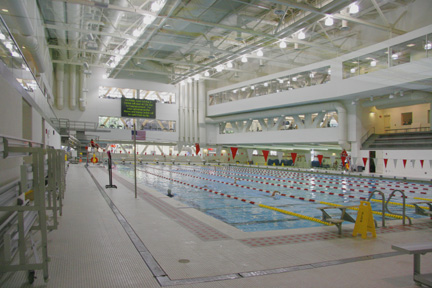
Dusk

Dusk

Tuesday, December 18, 2012

Inside Water


There’s a famous quote from Bruce Lee, martial arts legend, where he said:

Don't get set into one form, adapt it and build your own, and let it grow, be like water. Empty your mind, be formless, shapeless — like water. Now you put water in a cup, it becomes the cup; You put water into a bottle it becomes the bottle; You put it in a teapot it becomes the teapot. Now water can flow or it can crash. Be water, my friend.

Water takes the shape of its container.

Tonight I was sitting in the car driving home from our final residential trip to our local storytelling venue with my partner Laura.  Laura and I are about to move to Kansas City – big move.  We’ve both been in the Boston area for more than 20 years and more importantly, we grew up as storytellers here.  We each learned under the tutelage of Brother Blue, famed storyteller and self proclaimed holy fool for story.  And now, because of a job layoff and new exciting job opportunity, we’re moving to Kansas City.  Sitting there in the car we talked about our what we are taking with us from our community – from our nest.

Many saw Brother Blue as a colorful character.  He only wore blue from head to toe.  When performing he wore balloons pinned to his shirt, butterfly pins on his clothing and hat, butterflies hand drawn with sharpie on the palms of his hands and on his face, and a spectacular sash across his chest proclaiming him as a storyteller. And when he opened his mouth, what came out was more than stories.  It was him that came out, it was you, it was the world as he saw it and then as you saw it.  It was magic and holy and crazy and dream-like and sometimes hard to comprehend.  But it was always from someone who lived story, not just told stories.

We each have the power to change the world in some way.  Blue compelled us to tell stories from the middle of the middle of us to the middle of the middle of those who hear our stories.  The storyteller’s job is to give water – give stories that take the shape of the listener – every listener.  The world is a thirsty place for more than what can fit in a cup.  We need to give them life.

And as Laura and I travel to a new home 1500 miles away, we know we take water with us.  We will bring our stories.

Friday, September 14, 2012

Glide Faith


It happened again.  And I love it every time it happens.  That moment when I’m working with a student and they “get it.”  They have that sudden realization that they’ve just achieved something they never thought they could do in the water.  That moment when, after trying again and again, something clicks due to some image I gave them, some phrase, some change in the cosmic vibrations of the pool – and they get it, what ever it is.  And when they get it, they just grin.  Not a small grin, but one of those big ear to ear grins that would turn them tomato red if they could see their own face.  But fortunately they can’t and continue enjoying the moment.

I was working with a new student in her 20’s who had never taken formal swimming lessons.  Before our first lesson when we were sitting and talking, she told me her goals were to pass a necessary swimming test for boating, generally be more comfortable in the water and perhaps, in a couple years, do a triathlon.  She was already a runner, but she needed to learn how to swim.  And to that I said great, let’s get started.  In my mind I said, THANK YOU FOR NOT REGISTERING FOR A TRIATHLON NEXT MONTH.  I know that for some people setting such a deadline is just the motivation they thrive on.  But where’s the joy in pre-registering for a plan to almost drown or worse, being successful at it?

Once we got in the water, for someone who never took a swim lesson, she sailed through the rudimentary stuff.  Back float, front float, flutter kick on the wall and flutter kick with a board.  I had to work a little to calm her, get her smiling, get her laughing.  I had to help her understand that if she tenses her neck, her legs will sink.  Which is counter intuitive, since the legs are about a body length away from the neck, yet this is true for many people.  She pushed off the wall and did front glide well enough after a couple attempts, no problem.  Then back glide.  Problem.

The glide is an act of faith.  To do the front glide, you have to push off the wall with your legs, but it’s best to put your face in the water first with your arms outstretched in front of you.  You have to push off the safety of the wall assuming a position that leaves you unable to see where you’re going, since you should be looking directly down at the bottom of the pool, body shaped like a missile.  Plus all the investment is made up front.  Once you push off, you’re supposed to be still and sleek, slipping through the water and staying up with no additional propulsion from hands or feet.  You gotta invest everything up front and enjoy the ride.

But the back glide is an even greater act of faith.  Still all the energy investment is up front – you pay at the door.  But one must fight instinct.  Because everything that’s instinctive for adults to do and not do destroys the back glide.

First you push off from the wall as if you’re jumping up off the floor – but horizontally.  It’s instinctive to keep your feet flat, as if in preparation for that eventual landing back on the ground.  But the back glide rewards toe pointing – streamlining the body to make better use of the energy paid up front.  One leaps from the wall to fly, not land.  Have faith.

The next instinctive thing is to look where you’ve been – to lift your head, putting chin to chest so you can see down towards your feet.  But then that neck/leg connection comes into effect, the legs sink, feet hit the bottom of the pool and the glider stands up.  Instead one must relax and gaze skyward.  It’s the ceiling or stars that hold the secret.  Look up and have faith that the water holds no malice.  Don’t encourage it to drop you and it knows no better than to support you.
Little children listen to swimming instructors with complete faith.  And when you think about it, it’s amazing!  “Point your toes after you push off.”  And they do it.   “Head back – relax.”  And they do that too.  They soar on their back on request.  They’re like little water faith machines, unable to conceive of falsehood, while many adults have to work to revive that child inside.  My job is to help someone learn to soar that first time, so they never have to touch down again.  To fly.

I may not have looked like a tomato, but when my student finally flew, I grinned from ear to ear.

Tuesday, July 3, 2012

My Mexico City


At the time I’m writing this in June/July of 2012, every muscle of my middle aged body is aware that this is an Olympic year.  Which means that if the TV network that airs the Olympics in the US doesn’t screw it up like in previous years, I will be transfixed and transported in front of the TV again, just as I was when I was a kid.  To me nothing compares to the Olympics.  There is no other sporting event, no post season madness, bowl game, or cup final that compares to the romance, heart and drive the Summer Olympics have for me.  It’s where I learned things that school would never teach me.  Sitting in front of my black and white TV as a 10 year old in 1968, I was there.  The glow of the cathode ray tube may have been in South Philadelphia, but in ‘68 my soul was in Mexico City.

I lived with my mother and maternal grandparents.  My older sister lived there too, but by that time she was either off at college or working somewhere.  And since my mother worked two jobs to support us all, I watched all TV, including the ’68 Olympics, either by myself or with my grandfather, a former boxer.  Whenever boxing was on, Olympics or not, and especially when there were black boxers fighting, like the then 19 year old George Foreman who won the gold medal that year fighting a Russian, my grandpop watched.  And during the middle of that James Bond / Man From U.N.C.L.E., cold war era of ‘68, as George stood tall, my grandpop cheered, even though he could barely see the bouts.  My grandpop was then blind in one eye and had bad sight in the other, so he watched our TV with his face inches from the screen.  And still he couldn’t see clearly.  Watching boxing with grandpop sounded something like this:
   “Hey, is he black?”
   “Yes grandpop, he’s black.”
   “And what about that guy?”
   “No he’s from Poland – not black.”
   “Are you sure?  Play with that knob on the side again.”
   “I can play with the contrast knob all day grandpop, but the Polish guy is not black.”

Even though my Mexico City Olympic experience was seen from an acute angle in order to see around my grandpop, whose forehead kissed the screen, I was still transported.

Jim Hines winning the 100m dash.
To this day three images from that time stand out for me.  Images that have been circulating in my mind since before puberty and will hang with me until the day I stop competing in this sprint called life.  The first image is that of black men flying across our TV.  Now I loved to run when I was small and I knew I was fast.  But what I saw in ’68 were men my color, who went to college, flying around a track.  I saw them muscling around curves and down straight-aways, not as if they were getting away with something, but like they owned the track.  Go to college, run track, be the best in the world.  Oh ok. That’s the sequence?  Got it.  My ten year old mind had a model to follow – go to college, compete, be the best.  OK.

And that other guy?  Australian Peter Norman won
silver and on the podium wore the badge for the
Olympic Project for Human Rights.  He was left
off the 1972 Australian team.
The second image is fists in the air. Tommy Smith and John Carlos, after winning gold and bronze in the men’s 200m dash, made their awards ceremony a salute to the struggles of kids like me and a protest visible enough to wake up the world.  The ’68 Olympics were the first real televised Olympics for Americans.  Just south of the border, we didn’t have the time zone issues of Rome or Tokyo in ’60 and ’64. It was a live televised event.  So the live black power salute during the national anthem also served as a wakeup call to Americans who wanted to believe that trouble makers like Martin Luther King and Malcolm X could be contained within our borders, and were never - never in a position to represent our flag like Smith and Carlos.  It was a lesson in how national policies of ignorance, like racism, represent our country just as much as national athletic pride.  Smith and Carols were champions who wanted everyone to know something about the competition they faced off the track everyday.  And at 10 years old I learned that sometimes to be the best, you have to stand up, even if no one else is standing.

The third image is of the water, in an event that according to online records, never actually took place at the ’68 Olympics.  Yet I have this memory and it is vivid.  Perhaps what I’m remembering is something from the very popular ABC Wide World of Sports, since ABC was the network that aired the Olympics in the US that year.  Perhaps when I was home from summer camp and watching ABC in preparation for the Olympics, which actually took place in October, ABC featured a sport I had never seen before.  What I remember is men standing tall and powerful on the craggy peak of a cliff, high above the water. [Image: cliff diver] The backdrop behind them was more cliffs and the expanse of the ocean.  Below them were waves waxing and waning, as each man chose his moment to gracefully leap, the camera following them all the way down to a tiny splash, just feet away from the rocks below.  I had never seen cliff diving before.  It was hypnotic.  The divers would just stand there for who knows how long, waiting for the water, that appeared to be about a mile below them, to be just right.  How could they even see it?  These guys – and they were all guys, who on our black and white TV all looked like they had that George Hamilton 60’s TV California tan, though I’m likely remembering the Mexican athletes – these guys stood on cliffs!  First off, I didn’t even understand how they got up there.  It’s like an Olympic event to haul their ass up to top of a death defying piece of rock.  But then to stand there like a Rio de Janeiro Jesus and jump – and make it beautiful!?

This was a relationship with water that I knew nothing about.  That one could be on the highest part of the earth, essentially be a part of the sky, and fling themselves elegantly into the waiting arms of the water below.  I know that I could never judge such a competition.  It would be like grading prayer.  How does one measure individual skill, wrapped so tightly in faith, belief and the wisdom of knowing how to navigate so quickly through the worlds of earth, sky and water.  “You get the gold, you get the silver, and you the bronze.”  Yeah, whatever.  At 10 years old in 1968 I learned that success sometimes means taking a leap, falling with grace, and even with a tiny splash, celebrating life.


Monday, January 16, 2012

MLK 2012


Today we celebrate the life and work of Dr. Martian Luther King Jr.  I write this post sitting in a café, surrounded by people.  Fifty years ago it still would have been possible for me, an African American, to sit and sip coffee with others who don’t look like me, in this restaurant chain in Boston, but it would have been noticed.  I would have stood out. I would have had to pick the café with care, as some neighborhoods felt the need to keep obvious outsiders from being comfortable in their tiny corner of the metropolis.  And while perhaps I could do this in Boston, south of the Mason-Dixon line, my choices of establishment would be very limited, even given the same restaurant chain.  Choosing carefully would have meant choosing life. But today I am surrounded by blondes, brunettes, dark skin, light skin, people whose parents came from other countries, and people who probably speak another language at home.  As I stood in line behind a police officer, a white man perhaps a decade younger and a number of inches shorter than I am, I was aware of just how much the world has changed and yet how subtle that change is.  The officer completely ignored me.  I posed no innate threat to him or this establishment.  I was just another citizen.  

Photo by John Chuckman - http://chuckmanchicagonostalgia.wordpress.com
When Dr. King was alive, I did not have the privilege of just being another citizen, not even in the northern U.S. In a previous post I told the story of clearing the pool, when ignorant people made a choice in the 1960’s that was to my family’s benefit.  If any of you come from families that have made similar choices in the past, I say thank you on behalf of my family, though I hope you have gained some love and understanding over the years.  Because you are reading this blog, I’m guessing you have.

Last week my partner alerted me to a CNN article about a 31 year-old Ohio landlord who put a “Whites Only” sign on the fence surrounding her pool after seeing the biracial daughter of a white tenant swimming. This didn’t happen in 1961, but in 2011.  The landlord is not 81, but 31. And it didn’t happen below the Mason-Dixon line, it happened in Ohio, though in 2011 that should no longer be relevant.  Still, it happened.  It happened because the US is scarred by its racist past in ways that remain invisible until poked and exposed, hidden and yet too numerous to count.

Part of what my mother did as she taught swimming at the Center City Philadelphia YWCA in the 1960’s and 70’s was to help make Dr.’s King’s dream a reality.  When little black boys and black girls joined little white boys and white girls as sisters and brothers in my mother’s pool, the dream was real.  Under her watchful eye she gave them the gift of life, a survival skill that they would never forget.  And this gift came from a black woman at a time when black women where all too often invisible or disempowered by white society.  Who knows what these children heard at home, but in her pool the dream was alive and it had a face.
  
We can not change everyone’s mind and we can not all be a Dr. King.  But in what we do everyday, in who we are everyday, we can stretch, we can reach, we can spread our arms wide and embrace a beautiful diverse world.  And in that embrace we can truly be free at last.

Saturday, December 17, 2011

Lessons From Teaching Swimming

The best way to learn something is to teach it.  As a part-time swimming instructor, I know how to swim, but in teaching swimming there are certain principles that I must relearn for life out of the water.  Principles that make me a better person.
1. Prioritize breathing. A woman I was teaching once would swim a few strokes, then stand up – swim a few more strokes, then stand up again.  Each time she stood she’d be panting and wiping the water from her face even before her feet touched the bottom of the shallow pool.  My first assumption was that she tired easily.  But when I talked with her, I found that she was actually out of breath.  During those few precious strokes before standing, I saw her breath, but she wasn’t getting enough air with each breath she took.  Keeping her brief swimming rhythm was more important to her than breathing.  I told her that it’s more important to breath than it is to stroke.  I told her that eventually she will be able to do both well, but for now, she should prioritize breathing.  If she needed more time to breath, she should take the time, even if it meant her rhythm was uneven. Take the time.  When she did, she swam longer.

Every day I sit in front of my computer screen and bang my way through email.  Sometimes I skim through and deal with the more important items first.  But I easily get a sense of urgency and just jump in and slash away – first come first served.  Invariably I get myself bogged down in one task or another, one email request or another, one remote emergency or another.  I stop thinking and just go.  And when I do that, I forget to breath.  I stand up and cease effective work, complain about fatigue, and all too often avail myself of any number of distractions on my screen.  But if I remember to breath through my tasks, breath through my email strokes, breath through my day, I won’t have to stop nearly as often.
2. There’s no rush.  Another woman I was teaching was performing swimming strokes as if she was being chased – a little frantic and clearly faster than was comfortable.  Then when she stopped at the other end of the pool, she would gasp for air.  Some people think that if they don’t swim as fast as they can, they’ll sink.  But swimming isn’t a race, it’s a dance.  You flow through the dance with the water.  And when you flow nice and easy, the water will support you.  It’ll hold you up and keep you going with little effort.  You can swim fast or you can swim long, but you can’t swim fast for long.*  Let the water support you.

When I was a young parent, I worked all the time – at my job, at home with family duties, at home with take-home work, then as a parent in grad school, plus grad school homework.  I can’t keep that frantic pace anymore.  But I know that there’s a balance to find in my life now where I can be more efficient and effective with less overall effort, relying a little more on experience.  No doubt hard work is important.  But it’s also important to understand that one can work hard or long, but no one can work hard for long.  Unless you’re being chased, don’t rush through life.
3. No drowning.  On the first day of a series of private lessons with a 6 year old who loved being in the water, I found that he especially liked swimming under water.  I know this because he showed me at every possible opportunity.  This was fine, but there were a few surface skills that he needed to master first in order to move up to the next swimming level.  One of those skills was treading water.  The problem was that this kid’s little legs and hands where not yet efficient at keeping his body up and head above water.  Which for him was fine, since he was comfortable just sinking under water.  But what his instructor saw when he attempted to tread was the waterline start at his neck, then rise to his chin, then move up to the back of his ears.  Standing in 4 and a half feet of water, I was able to calmly reach out to him, grab him under his arm and guide him over to the wall.  “First rule in my class,” I said, “is no drowning.”  His puppy dog eyes looked up at me.  “OK” he said.  

I am now the parent of adults who are all out on their own.  I have no pets I have to walk, feed or groom.  While I value my day job, it’s not one that has me developing products or services that are vital to life.  There is in fact no other place in my life where I get to say, no drowning and actively mean it.  My day job pays the bills, but teaching swimming teaches me that I can still make a difference. 

* Adapted from a common saying of cycling trainer Bobby Mac of Quad Cycles
** All images taken from the American Red Cross "Swimming and Water Safety" manual.

Friday, November 26, 2010

Size Matters

Size may not matter for a great many things, but it matters for pools. 
 
I grew up swimming in 25 yard pools.  My YWCA pool as kid was 25 yards.  My high school pool was 25 yards.  Most lap pools are 25 yards. That’s just standard.  OK, so maybe there’s a shallow and deep end or not.  Or maybe there are only 3 lanes, or 4, or 5.  But for me the standard length is 25 yards.  Even if it’s 25 meters, that’s still only an extra 6 feet and change. No biggie. I like 25 yards.
 
I went to a YMCA day camp for a couple summers that had a pool that was probably smaller than 25 yards.  The walls of the pool room were mostly a dingy yellow tile with black trim.  I’m not sure if the tile started out dingy yellow.  Who would choose that color?  I only hope that the walls evenly faded over the years of camp kids and swim lessons to finally take on the color of a depressed canary. This of course made the pool room dark, with eerie watery reflections on the ceiling, like in a bad slasher movie where the next victim is, for some unknown reason, swimming alone.  But I don’t want to misrepresent the Y – it’s not like there was a bare 60 watt bulb swinging over the diving board.  But no amount of artificial light could have overcome that depressed canary color.  So when we camp kids were in the pool, we had to play hard to make the room seem brighter.  The sounds of our voices and splashes played against the walls and ceiling.  The pool room was lit by our voices and imaginations, as we dove and burst up from our 10 foot vertical playroom with pool rings.
 
Size does matter.  Since those many decades ago of summer camp, I’ve found a number of 20 yard “lap pools,” but they’re not real pools to me.  Five strokes and I’m looking for the wall.  But I don’t want to seem like a snob.  Many people don’t care and that’s fine.  If you walk back and forth from one end to the other, it doesn’t matter how long the pool is.  If you like to float on your back and kick or if you’re just learning to swim, then what does size matter.  If the only reason you use the pool is to cool off after sitting in the hot tub at the gym, size doesn’t matter.  Otherwise, it matters a lot.
 
The University of Pennsylvania was my first 50 yard pool.  It was enormous!  I got to use it just once a year at the Philadelphia all-city swim meets, for the two years I competed in high school.  I swam the 100 yard freestyle, but I trained and competed all season in 25 yard pools. Come spring during the big city meet in that 50 yard pool, it felt like 100 yards was swimming over to Jersey and back.  Since I only had one wall to bounce off, I couldn’t judge the competition.  Am I winning my heat?  I don’t know.  I’m in open water.  Is that a tug boat?  The sound during those meets was deafening.  Hundreds of teenage teammates and parents filled the stands, screaming encouragement at their favorite competitors who were for one, busy, and two, had their heads in water.  The space was loud, but the swimmers couldn’t hear a thing.
 
The MIT pool is also big.  It’s somewhere between 50 yards and 5 miles long.  I should say it’s the “new” MIT pool.  The older Alumni pool is a fancier version of the old dingy Y pools, but with bleachers and only a slightly better paint job.  The pool in the newer athletic facility gets some natural light and is the size of an entire zip code.  This was the pool we used for WSI class.   The first day of class the instructor said, “To warm up, everybody swim to the other end of the pool and back, any stroke you want.  I want to see how you swim.”  OK, what time do you want us back? I have dinner plans.
 
The only people who swim in 50 yard pools are adults swimming laps and teenagers, who are either doing competition training or life guard classes.  Which means that when there isn’t an all-city competition, 50 yard pools sound different than 25 yard pools.  Sure the walls are further apart, so sound reflection is less severe, but otherwise 50 yard pools are in huge bright rooms with petite well trained splashes.  There’s no yelling or screaming; no diving and coming up with pool toys; no audio color.  People are there to just put one arm in front of the other.  So 50 yard pools lack some character.  I wonder how many rich guys have 50 yard pools.  If for no other reason than so women can see them and think to themselves, “Wow, that’s a big pool.  I wonder what he’s compensating for?”
 
Then there are hotels.  In the movie Up In The Air, George Clooney’s character is seen swimming laps in a 25 yard hotel lap pool. Where the hell is that hotel?  It doesn’t matter – I couldn’t afford it if I knew.  I’ve never seen a hotel with a 25 yard lap pool.  The hotel chains I stay in hire architects on crack.  The pools are weird rounded shapes vaguely resembling a kidney or an amoeba.  You have to be on crack to look to microbiology for shape inspiration for a pool. Or maybe it’s some concrete contractor having fun after smoking a lot of pot.  
 
“Dude, if you cover one eye, the pool kinda looks like a turd, doesn’t it?  So Cool!  So I thought we’d dot the turd with a little round hot tub next to it.  I mean come on – what do people expect for 75 bucks a night, right?”
 
When I wanted to improve my strokes before WSI training, I found the site for Total Immersion Swimming.  Their videos are great, but they demonstrate some of their strokes using an Endless Pool.   An endless pool is basically an overblown bathtub with a current.  Swim against the current and you never reach the end of the tub. Like magic, a pool where size can’t matter.  Yeah well, as my mother used to tell me, “Save all your pennies and one day…” But she would never finish that sentence.  One day I’ll be able to afford my own pool, which will be the right size and which I hope to use endlessly.  And it will have pool toys – for color.

Sunday, November 14, 2010

Tub View

I don’t own a home, but I’m a proud renter. The whole American Dream home ownership thing has never been a strong draw in my life.  Plus given the economy, I’m ok with not having scary mortgage issues.

But one of the down sides for not owning my own home is that I can’t own a hot tub.  I love hot tubs.  I fell in love with them almost 30 years ago when I moved to California and it’s been a torrid bubbly love affair ever since, no matter where I’ve lived or traveled.  If you are my friend and you own a hot tub, know that we are not friends just so I can crash your jacuzzi every once in a while, but it doesn’t hurt.

As a member of Bally’s Total Fitness,  I was greatly dismayed when they closed some clubs a year ago to help their bottom line.  They closed the one near where I work, which made dealing with daily traffic, cubicles and hours under florescent light far less appealing.  That club had a 25 yard pool (which unfortunately is rare) and a huge hot tub.  And the culture of that gym was geared more toward weight lifting, so there weren’t a lot of swimmers – score!  Now I’m down to just one club in my area with a full size pool for lap swimming… and hot tub.

Since I completed WSI last Christmas, hot tubs at Bally’s have not been the same.  Before, I sat in there to warm up before starting my laps.  This year due to either laziness or fatigue (or both), I’ve been soaking up those hot jets for longer and longer every time I get in.  Sometimes I won’t even do any laps, but just close my eyes and do the rotisserie thing – lie on my back for a while, then roll over to my front with my head in my folded arms, then repeat every few minutes.  Oh yeah.  This is water done right!

Once relaxed, I’ll poke my head up, feeling better, but not wanting to get out.  Instead I’ll just watch other people swim.  And here’s where my life has been changed forever.  It used to be that I didn’t care how other people swam.  I just cared that they got out of the pool so I could have the lane, thank you very much.  But now I watch and I analyze.  What are they doing?

  • She’s either afraid to put her face in the water or her hair in the water.  I wonder if anyone's ever worked with her on that?
  • Oh I see his problem.  He doesn’t think the water can support him, so he’s thrashing his arms from one end of the pool to the other.  It's so exhausting that he has to rest for minutes at each end.  
  • You know, her stroke would be so much better if she stretched her arms and glided like a swan. What’s the rush?  I could teach her how to do that. 
  • Hey muscle man, stop boxing with the water!  This isn't Taekwondo.

Of course, I never say these things out loud, but I want to.  I want to walk over and say, “Dude, let me help.  I can help.”  But that’s hard.  Most men would tell me to butt out.  Plus the dumbest thing in the world to do is make a guy uncomfortable who works out regularly and with whom you share a locker room.  And with a woman, how do you not make it sound like a bad pickup line?  What they’d hear is, “Hey baby, let me show you how to stroke.”

So until I get a swimming instructor job, I’ll just keep my mouth shut, my body in hot water and my thoughts on swimming.  But hey, if you know of a part-time swim instructor job opening, I live in the Boston North Shore area.  And I won’t even insist that the pool have a hot tub.  But it wouldn’t hurt.

Friday, October 29, 2010

Water When You Don't Want It

Mid-City YWCA in 1954 (before I was born)
As I've stated earlier in my blog posts, I grew up in a swimming family. This was made possible in part by my swimming instructor mother.  But since she worked at the YWCA in downtown Philly, we had a number of advantages made possible by the Y. Swimming was just one. My mother was always scanning the Y class list, looking for things that I might want to take. They included judo, aikido, French, and fencing. I can't remember if I took French before or after fencing, but I do remember that my fencing teacher was French and I couldn't understand a word the guy said. But since he was holding a long pointy stick and was better at wielding it than I was, I paid more attention to him than any other teacher in my life. No drifting off in this guy's class.

But the other class or really group activity at the Y that we availed ourselves of was the ski club. Now being an African American kid on the ski slopes in the late 60's and early 70's meant that I was more than a minority - I was a super minority. I could have worn a cape. I was so rare on the ski slopes that the only way I could have been more of a minority was if I came down the slopes playing hockey and carrying a golf club... wearing a yarmulke. Unbeknownst to me at the time, I probably caused a few cases of whiplash. “Whoa, is that kid lost?”

We didn't go skiing every weekend in the winter. We couldn't afford it. Even back then skiing was expensive. There were the lift tickets, the rental of boots, skis and poles, then the gas to drive from the city to what ever northeast ski resort was within a 4 hour radius. The closer the better. People don't generally think of New Jersey as a Mecca of downhill skiing - and it isn't. Think Atlantic City with a vertical drop; a small vertical drop. Those aren’t bare patches, those are top soil pylons; this is the Garden State. Just go around ‘em!

From about age 10 to 13, five or six times a year I would go with my mom on YWCA ski group trips to Elk Mountain, PA, Big Bear, NY, or some cheesy hill in New Jersey. Hey, if we could afford it, we would go. Sometimes I would go without her, just me and some kind woman skier from the Y. And at that age I didn't even care that I was spending the day with a cute single young woman with a car. All I cared about was going down hill fast, catching some air on the moguls, and doing it as many times as I could before the time and the calories from my multiple flattened peanut butter and jelly sandwiches ran out.

I stopped skiing when I was 13 because... who knows why. Perhaps it was because my mother stopped working at the Y and dropped down from working two jobs to just working at her full-time school district social work job. Perhaps it was because my interests drifted to skateboarding, or math & science, or swimming. Or perhaps it was because I was more interested in paying attention to all the girls who were ignoring me. One of those.

I didn't ski again until I was 17. I was a senior in high school and on the swim team. The competitive swim season was coming to a close in the spring and I had serious senior-itis. That was when the announcement came down that the senior trip for my predominantly black high school was going to be a day on the ski slopes. This will be something new they'll remember, I'm sure the administration thought. We went to a hill that didn't have a noble animal name like Elk or Bear. It was in the Pocono mountains – the Alps of the Keystone State. Now if one wouldn’t necessarily consider Pennsylvania the Mecca of skiing, then Pennsylvania in April is like the anti-Mecca. Picnics perhaps – but skiing?  Not so much.   I wouldn't call it snow that was on the ground. There were rocks, there was slush, and there was water. We could have done some chilly laps in the pond at the bottom of the only active slope on the hill. Strange that they had a pond in front of the ski lodge. Was it always there? If we were smart, that would have been a red flag.

Imagine a couple bus loads of black teenagers from the city, at the base of a mountain of barely frozen water, getting fitted for boots and skis. "Hey, has anybody ever done this before? I never skied before. How do you walk in these things." Keep your mouth shut, Kevin. You're just the geek that swims. That's how they know you. Just be cool. Ok, perhaps you could just suggest one thing… "Try carrying the skies until you get to the snow."


(not me)
Imagine two bus loads of black teenagers on a rope tow for the first time. I've seen WWII movies with less carnage. Bodies all up and down the slope.

"Kevin, you ever done this before?"

"Yeah, a couple times, a long time ago. It's been years, really. So long ago that I doubt I remember how."

That was the juiciest half lie I had ever told. It's true that it had been years - about 4. Did I remember how to ski? Hell yeah! What's to forget? Stand up, point the skies down hill, snowplow all the way down with a little Jean-Claude Killy ain’t-no-big-thang slide turn at the bottom. Hell yeah! "Hey, Kevin's skiing!" It took an hour to get back up through the rope tow carnage and down I went again, with two bus loads of classmates staring at me, the geek. Now it is true that the cooler and more athletic of my classmates did eventually get it. And hats off to them for learning to snow ski in a downhill water ski zone. But I was the only student who really knew how. True, I discovered that I wasn't the only person who knew how. I think it was an assistant principal who went down faster than lightening. Clearly he was one of those noble animal ski slope people who actually pay real money to ski in the winter – on actual snow.

Since high school I've only skied once or twice. It's fun, but just way too expensive. When I finished grad school and got a job, I took my kids skiing for a day. Spent a fortune! More than I had ever spent on an outing with them. I recently saw an ad for a masters swim club in my area, where you pay for a membership for 4 months at a time. Each 4 month period costs the same as taking my kids skiing for just 3 days. Damn that’s a lot of money! And it’s just for me.  But sorry kids, this one I might do. So if you want to ski again, start saving!


It's not a magic toboggan.  Come back
 in the winter when there's snow.

Sunday, May 9, 2010

No Water

Thank you for stopping by my Blog! Please explore all this Blog has to offer, then jog on over to Bestow. If you would like to visit a different Blog in the jog, go to http://blogjogday.blogspot.com.


No Water
On Saturday May 1, 2010, just over a week ago, a collar connecting two pieces of a water supply main broke in Weston, MA.  The numbers associated with this failure are impressive:  64 million gallons of water was lost, 30 communities equaling 700, 000 households or some 2 million people were affected.  We were told that the water was unsafe to drink and we had to boil it for at least one minute before drinking it.  The stores suddenly became barren of bottled water.  People panicked.  The unofficial “man on the street” opinion was that it was going to take weeks to fix.

When I found out, I was on a highway heading south west in Connecticut to visit a friend.  I got the call, “Yeah, we’re in a boil water order.”  OK.  “Just thought you should know.”  OK.  Have fun with that.  See you tomorrow when I get back.

In Connecticut I bought a case of 6 gallons of water at Costco, because why not.  If this was going to be weeks, then let’s get this party started.
By Tuesday, the water main was fixed and the water was tested safe.  We had to run the cold water in the sink for a minute and run the hot water for 15 minutes – though a couple warm showers I think also did the trick.

We had no water for 3 days – 2 for me since I was going away to see a friend.  Not really a big hardship.  No major sacrifice.  No big loss.  To many, not having potable water was hardship, but that wasn’t hardship.  That was nothing close to hardship.  Hardship is when you don’t have a choice of 5 brands of bottled water and 5 more brands of carbonated bottled water in your local supermarket, which are EVERYWHERE.  Hardship is when you don’t have food on the table or even the hope of food on or near the table.  Hardship is when water, any water, is scarce. 

We were not in hardship.  We were in “wait and see.”  We were in, “Well I’m glad we have the best water supply in the world.”  We were in, “We are lucky to have what we have.”

I’ve decided that I like the occasional drought.  It can be a good teacher.  I like water, but I can appreciate it even more when it’s not as convenient to get it. 

Sunday, April 11, 2010

Awesome

Our kids were pretty young when we moved from the San Francisco Bay Area back to the east coast, specifically to the Boston area. When they started school here, even though they were just in the first grade they were amused by the quaint colloquial use of language by Boston area natives. “Wicked” meant good. It had nothing to do with a witch. “We had a wicked time” was a good thing and saying it, even if they were just repeating something they heard some kid at school say, brought a smile to their faces.

The other term that came into use around the house was “awesome.” And to be fair, popular media as well as the cultural influence of the area was to blame for this one. “Awesome” meant yes, or all right, or that would do, or thank you. “Hey, can you pass the salt? Awesome.” But there was no awe in this awesome. All of the natural authentic awe was replaced by a cosmetic stand-in awe, expressed only in the tonality in which the word was delivered. “That was AWESOME!” No that was just salt. Get over it.

Few things are actually awesome. If one has a personal experience with their creator, that might constitute as awesome. Seeing a child born, especially if it’s your child, most especially if it’s your grandchild, that could be described as truly awesome. Ask any grandparent.

Water is awesome. Sip it and it will give you life. Harness it and it will support life. Ignore it at the wrong time and it will take life away. Here are some examples.

I’ve started on a new diet. One of these popular ones that includes a hell of a lot of exercise and a particular form of eating. The diet makes sense. For the most part it doesn’t make unreasonable demands and it explains the reasoning behind its tenets. One of those tenets has to do with drinking water – massive amounts of un-carbonated water. I like to swim in it, shower in it, and sit in a hot bubbling soup of it, but drinking a lot of it is hard for me. If I successfully start to regularly drink a half gallon of water per day, I will be filled with awe between my frequent trips to the bathroom. Though I do occasionally employ the whinny form awe, that being aw. “Kevin, put down the coffee and drink some water.” Aw!

From spending so much time at the beach, I’m used to the power of waves as they barrel into shore, finishing their reach onto dry land with a thin film that glides over the sand until it stops and recedes. The waves are gentle and almost predicable. We lay bets on whether a sand castle will stand up to repeated thin gliding reaches of the waves. But when those waves are inspired by seismic activity way out in the ocean, it is another matter. I always envisioned a tsunami as a giant wall of water hundreds of feet high that hits the coast and wipes everything out in one fell swoop. But that’s not the case. That’s not water’s power. Nature does not have to be big to be powerful.

Instead, a tsunami is a scaled up version of that thin film that glides over the sand. But in a tsunami, the water glides in and just doesn’t stop. Instead of receding, it proceeds, forward, inward, picking up whatever is not anchored to the ground, as well as many things that are – or were. The power of water here is not just that it can destroy and kill, but also that it delivers perspective; a special form of vision that gets overshadowed by the desperation and fear the event triggers in the citizenry. Perhaps for the first time, one might see how close to sea level they live and work, and how tenuous their coexistence is and always has been with the ocean, river, stream, lake or damn. Water has a way of quickly communicating its relationship with your life and sometimes that relationship is not good.

Water inspires real awe. Nothing cosmetic about it.

Sunday, March 7, 2010

Our Pool

When I was young, my extended family and I spent one week a year at the Jersey Shore.  My aunt Jane and her family, my aunt Phyllis and her family, my mom, sister and I would all drive to Wildwood, a little south of the more famous Atlantic City.  While the adult males at that time would have strongly disagreed, I grew up in an extended matriarchy.  All the women worked, they saved their money all year, planned and led the vacations.  The dads could show up if they wanted, but the bus was leaving with or without them.  Actually it wasn’t a bus, but more like a caravan of mid 1960’s Chevy’s filled to the gills with luggage and more vacation crap than you could shake a stick at.

For me, Wildwood was about two things, beach and boardwalk. The beach held us in its arms during the day and the boardwalk at night.  The beach was sand, sea shells, sea gulls, ice cream vendors, the hot hot sun that baked us to cinders, and an ocean that didn’t know how to stop blessing me with salt water and waves.  I was there to body surf.  And for this skinny 10 year old kid who loved being in the water, the waves and I danced in and out all day.  It was great.  And every late afternoon when the family would drag itself back to where we were staying, it was shower time.  Because half of the seashore was stuck to our skin and swim suits.

There were a few different places we stayed during the Wildwood years, but mostly we stayed in the attached bungalow of Rose Marie Manor – a small motel owned by a friend of the family. I think the bungalow had 3 bedrooms, two upstairs and one down, plus lots of floor and couch space for various older teenagers. What I had forgotten was that the motel had a pool.  I don’t remember ever going in it.  Why would we?  The beach was just a 4 block walk away.  Of course we walked there loaded down like dessert camels with beach bags, chairs, umbrellas, and the kitchen sink.  We never drove to the beach.  The matriarchs saved all year for the lodging, not the parking.  Please!  “Oh, that’s highway robbery!” my mother would say.
This is a picture of Rose Marie Manor from a postcard I found when going through the old house in Philadelphia.  The bungalow is behind the motel to the right. Rose Marie Manor had a largely black clientele since it was black owned.  It was also probably the only pool in my life where everyone in it was black and not related to me.  That was because our family had a way with pools.  Let me explain.

My mother was a swimming instructor and life guard, my aunt Jane was a swimming instructor, and everyone else in my family swam.  It wasn’t coincidence, it was the law.  Whenever we took any family trip that involved an overnight stay, having a bathing suit was like carrying an ID – don’t leave home without it. Because whichever matriarch planned the trip made sure there was a pool.

My older sister was the first in our family to go to college and for the first three years she went to school in rural PA.  But she spent her senior year internship in Flushing, NY; to which the family response was, ROAD TRIP!  The Holiday Inn in Flushing had an outdoor pool, so when the weather was warm, we were off to visit Sharon.  I don’t remember how many of us were on this trip.  It was probably only 8 – it felt like 80.  I’m sure we had multiple rooms, but I can only remember us in one.  And because it was my family, I know there was a coupon or discount somewhere in the mix.  First day in the hotel, it was time to go in the pool.  We could see it from our hotel window.  There were people sitting around the edge in lounge chairs, a few people in the water splashing and diving.  That’s where we belonged.

Our motley crew arrived down at the pool – bathing suits, towels, two certified instructors and all deep water swimmers.  Everyone turned and looked.  And as we got in the water, everyone else got out.  At first we thought, that was odd.  Where’s everyone going?  It eventually hit us, Oh right, they don’t want to swim with black people.  Oh well… more pool for us!  And then we proceeded to have a good time in “our pool.”  But that wasn’t just a Flushing, NY thing. It happened in pool, after pool, after pool down through the years.  All hotel pools became our pools.  Sometimes we’d just clear the pool, other times we’d take out the entire pool deck.  It was a running joke in our family; “Time for us to go clear the pool.”  And we would, without ever saying a word to anyone.

We got so used to having every hotel pool to ourselves that the first time it didn’t happen, when the white people didn’t get out of the pool when we got in, we thought there was something wrong.  Wait… Hello!… Aren’t you supposed to get out now?  Damn racial progress.

My family is scattered now, so it’s unlikely to see us together at a pool anymore.  But whenever we talk and the topic of swimming comes up, invariably someone says, “Remember clearing the pool?”  Yep, in every place but Rose Marie Manor, just 4 blocks from the beach.
Saturday, February 27, 2010

Breath

Have you ever looked at swimmers or any athlete for that matter, and said, “I wish I could do that.”  They don’t need to be a top athlete, but just a average Joe on a team, or not on a team, doing what they do, working their way through their sport, not at the bottom, but also not at the top.  You might see some small technical thing they do that you recognize only because you’ve tried to do that very same thing unsuccessfully – a particular arm swing during a high jump, the angle of a wrist during a pitch, a catch on the run, or a flip turn.  That happens to me a lot – Man, I wish I could do that!  And often it comes down to breath. 

Last year I was at the gym sitting in the hot tub – I LOVE hot tubs – and I was watching an older gentleman also in the hot tub as he watched a young man swimming laps in the pool just a few feet away.  The older gentleman was probably in his late 60’s, was rather thin and wearing a Speedo.  I’ve noticed that older guys don’t wear Speedos unless they wore them for a legit reason when they were young.  And they wear them now whether they’re in the same shape they were in 30 years before or not.  Gut – what gut?  Sometimes that Speedo of today has an awning it didn’t have during their younger athletic days. 

The younger man doing laps was in his 20’s and was chugging along freestyling at pretty good clip, doing fast open turns at the walls and an occasional flip turn – lap, after lap, after lap.  The older man stared at him with a fascinated look and I wanted to know why. 

When the younger man stopped, the older man said, “Hey, so are you a triathlete?”  “Yeah, how’d you know?” the younger guy asked.  “You’re breathing.”  “Oh yeah, on both sides?  It really helps,” said the younger guy.

The older I get, the more I see how much of life comes down to breath. I knew of that thing the younger guy was doing – bilateral breathing.  I read about it.  But man I wish I could do that.  My regular right hand breathing seemed so comfortable.  Why should I learn another way to breath?

When I first learned to use a mask and snorkel, I found the whole practice was mostly about breath.  If you’re in the ocean, you can distract yourself with cool things to see, but when I’m in the ocean or pool, my mind is focused on my breath.  What it sounds like while I’m forcing air in and out of a plastic tube, how I continue breathing even with the occasional intake of salt or chlorinated water, what it feels like to hold my breath when I dive below the surface, how much force I need to blow water out of the snorkel when I resurface.  Snorkeling is not about swimming, it’s about breath.

When I learned SCUBA, I had to relearn to breath and control my breathing no matter what.  “Never hold your breath – always breath,” my instructors would say.  Completely surrounded by water, exploring a strange new world that you are just visiting at best, SCUBA claims to be about fun and safety.  But when you’re down there with your life strapped to your back, everything you see is silent and the only thing you hear is the rhythm of your own breathing.  Be calm – in and out.  SCUBA offers a level of inward focus that would be helpful on dry land.  Because down there, when you get excited, you hear your life rhythm change and it engulfs you.  Be calm – breath.

During WSI training the instructor said, “OK, now I’d like to see you breath every third arm stroke.  Bilateral breathing.  It makes you swim balanced.”  He said it as if to say, of course you know how to do this and have been doing it for years.  So go do it.  With the image of the young man at the pool in my head, I just did it.  I did it!  Another hurdle of WSI overtaken.  I can breath balanced!

One might say, So what? Everybody does it. What’s the big deal about breath?  The most common thing is also the most precious.  Perhaps it’s for more than the obvious reason that if we don’t breath we die.  We are made of breath.  When we don’t breath, we reject who we really are. There is that bible verse in Genesis that says, “…the LORD God formed the man from the dust of the ground and breathed into his nostrils the breath of life, and the man became a living being.”

We are more than flesh, we are made of sacred breath.  Being in water helps remind us how important that is.

copyright 2010 Kevin Brooks

Tuesday, January 12, 2010

Did It!

I grew up in the era of public service announcements about illegal drugs when they said, “Marijuana is merely a stepping stone to harder drugs.” I mention this here because this is how I was introduced to the concept of stepping stones. Because it’s hard to find streams to walk across in the city.

Jr. Lifesaving was supposed to be a stepping stone to Sr. Lifesaving. And Sr. Lifesaving was supposed to be a stepping stone to Water Safety Instructor. Why? Just because. That was the ladder. You climb the ladder. That’s how life works. You climb the ladder until you’re happy. Happiness comes with altitude. God bless America.

I stopped at Sr. Lifesaving. I swam competitively in high school, which was a very weird transition for me. Playing in my favorite environment changed to going as fast as I possibly could until I was about to puke – in my favorite in environment. Fortunately I wised up in College. Or more accurately, in college I was attracted toward and distracted by other things. Dry land stuff mostly. I still swam, but nothing intense like racing.


On Tuesday, Dec 29, 2009 I finished WSI training at MIT. I’m finally a Water Safety Instructor some 34 years after I thought I was going to be. Not bad when you think about it. I did a few other things in the time in between. School, family, job, two cross country moves, more school, writing, performing… you know, the usual. But the point is that I did it. But why? Why did I need to complete WSI at my “advanced” age? I’ll tell you my reasons. First let me tell you my mother’s reasons.

My mother epitomizes the strong black woman. Born in the early 1920’s, she’s seen a lot of history – the depression of the 1930’s, WWII, Korean and Viet Nam Wars, JFK, MLK, RFK, burning cities, marches, 70’s hair, polyester, moon landing. We’ve been a busy nation and she’s been there. But it was back in the 1940’s when she heard of black people drowning. “Drowning!? They drowned? That’s just stupid! There are people lynching us, starving us, discriminating against us, and here we die from something completely preventable!?” She was indignant. That’s when she decided to be a swimming teacher. She’s also been on a tirade about one thing or another ever since.

Fast forward to the 1990’s. That’s when I met people that I thought were from Mars. You might think that would be cool, meeting an alien life form, but all I wanted to do was help them. “I don’t know how to swim,” they told me. What? Really? Or I would hear the kinder gentler form, “I’m not a strong swimmer” – which in self conscious proud adult terms often means “I can’t swim.”

Once a friend of mine asked me to teach her how to swim and I enthusiastically said, sure! I’ve been swimming for decades, I’d love to teach you, I said. Then I thought about it and realized that I had no idea how to teach someone to swim. I made a quick call to my mom. How do you teach someone to swim? She walked me through some steps. That was my first WSI lesson – it took all of about 60 seconds over the phone. No suit required.

I got in the water with my friend and started working with her. Then it hit me. “Um, you grew up in the Philippines, on an island. What do you mean you don’t know how to swim?” But she didn’t know how to swim, as is the case with a lot of island people here in the US. It then occurred to me that there are also a lot of young new parents who don’t know how to swim at all or don't know how to swim well. They celebrate the birth of this kid, then realize they’re screwed when they take that kid on vacation. They KNOW they won’t be able to avoid water-based trips - pools, the beach, lakes. How are they going to ensure their child’s safety in the water as they do on land?

So to you new non-swimming parents and to you islander immigrants out there, I’m here to help. Contact me.

(In a future post I’ll describe what it was like to be the oldest person in WSI class.)

Monday, January 11, 2010

Sr. Lifesaving


When I was about 14, I took my first lifesaving course - Jr. Lifesaving. It’s an odd certification that no longer exists. Did it mean that I could only safe junior lives? I’d been swimming since I was 4, my mother was a life guard and swimming teacher. I lived in the pool most Sundays when she was the guard at the Center City YWCA. The picture is on one such Sunday. That's skinny little me on the board, my mother in blue. When I was 14 I wanted to take my place, follow in her footsteps. So I took Jr. Lifesaving and I passed. It was no big deal.
Most of the work was in the pool and I ruled the pool. It was like a game. I’d go up to the drowning person, which in every case was one of the instructors pretending to be drowning, wait until they were docile or pretending to be docile, dive under water, come up behind them, get them in a chin lock position, reach around for a cross chest carry, position them against my hip and side stroke them to the end of the pool. Not bad for a 14 year old. I think I was about the best student in the class.
When I was 16 I was old enough to take Sr. Lifesaving. This was harder. It required study – book study. I had to read crap. I had homework from “real school” to contend with and now I had scintillating early 70’s Red Cross prose to hack through? It made no sense. Oh the pool stuff was mostly more of the same, with a few added skills thrown in. But the other people in the class weren’t 16 like me. They were old – in their 20’s and 30’s – ancient. They drove to class, in their own cars! They owned shavers. I didn’t even need one.
I passed the pool part. I didn’t ace it, but I passed it. But I failed the written exam. I wasn’t used to flunking. I was an honor roll student in real school, but apparently not in “pool school.” I was somewhat accustomed to the patronizing attention from the instructor, a crusty older white guy who also happened to be my mom’s boss. He would look at me, this bone skinny black kid, and smile like he knew I would fail. I was never sure if I could trust his smile.
At this point other teenagers might have given up. After all, there were other things to do in life. There were hobbies, friends, a social life, TV, sleeping. I really liked TV – I really liked sleeping. Why do I need to be the youngest person to achieve an adult accomplishment? Why should I push against the system? Who needs that hassle? I did.
A few months later I took Sr. Lifesaving again. On the first day of class the same instructor had us write on a piece of paper why we wanted to take Sr. Lifesaving. I can still see him laughing as he read my paper to the class. “Because I failed it the first time. Ha – ha – ha!” I didn’t care. I could deal with patronizing. I could deal with being underestimated. I was an American black teenager in the 70’s. Most people outside my family underestimated me. I came to expect it - even leverage it. I could deal with it. I could deal with anything, I thought. And then I met the assistant instructor.
It’s not that she was stunning in a bathing suit. She was pretty enough - tall and slender. It’s more how she wore her bathing suit. Once I noticed a certain physical attribute of hers in her bathing suit, I couldn’t keep my eyes off her. I don’t ever ever ever remember seeing this type of thing before. I must have been blind since birth. Miracle workers from Wills Eye Hospital must have come in the night and installed working retinas and lenses. I must have passed Jr. Lifesaving with the help of a seeing-eye dog. Those are the only possible explanations for me never before noticing how long blond hair could play peek-a-boo from the bottom crotch-edge of a woman’s bathing suit.
I didn’t just stare – I was a frozen drooling mess. The hairs held my attention way more than the water. “OK, this is what we’re going to do today class. Are you listening?” “Uba yuba yabba thuba,” which in 16 year old male means, “Nope.” They just laid there, the hairs, and stared back at me. They were arresting. Oh there were times I tried to be cool. Yeah I’m just staring down at the pool deck tiles. Why am I always looking down? I’m just shy - shy and REALLY fascinated and desperately trying not to look.
Eventually, they did more than just stare back at me. They spoke to me. They became a blond pubic chorus, speaking as one. “You can do it.” “Read the chapters.” Yes, whatever you say. “And remember to clear the airway before administering resuscitation.” Yes of course. “You missed that on the last exam.”  Right.
One could say that having taken Sr. Lifesaving before, I knew what to expect the second time around, both in terms of pool skills and the written exam. One could also say that just the extra opportunity to study for the exam was all I needed to pass. Or one could say that I had been motivated since I was 4 to attain the same level of pool supremacy as my mother. One could say all those things. But I was 16 and I know God spoke to me in the form of a chorus. A chorus of blond peek-a-boo pubic hair from the bottom crotch-edge of a woman’s bathing suit.  God is good… and I passed.

Thursday, December 17, 2009

Initial Post

I don’t know if I’ll leave this world with my ashes scattered over water, but I do know that I came into this world and navigate it through water. All my life has been defined in one way or another by water. This blog will be an expression of my passion for two things, water in all it’s forms and writing.

I’m a storyteller. Yes, everyone says that. Spielberg says that. “I’m really just a storyteller.” I bet Jerry Bruckheimer says that before igniting 500 pounds of incendiary explosives in what ever romantic action movie he does. Some corporate execs call themselves storytellers. Word of advice – if they work for either the legal or finance departments, believe them.

I really am a storyteller. I don’t work for Hollywood and I’m not a corporate exec. I write and perform stories about my life. I do other things as well. I love doing other things. But the older I get, the more I understand how much those other things are informed by stories -- stories and water.

So this is the beginning of some words about water. While I have a lot to say about my relationship with water, I was inspired to start this blog because I wanted to chronicle my experiences of a water safety instructor course I’m about to start this weekend. This is something I’ve wanted to do for about 35 years. More about that in later posts.

A word of preparation – while I am predominately a personal storyteller, someone who weaves pieces of my own life into stories with universal themes, this blog will NOT be a navel gazer ego trip ramble. I want you to enjoy reading it because its decent writing. When I fail to deliver on this, just tell me so I can make it better. Also, consider it an adult themed blog. Not pornographic in any way, but my posts may not always be for young consumption. Just wanted to let everyone know. Thanks.